 THE UNIVERSITY OF CHICAGO

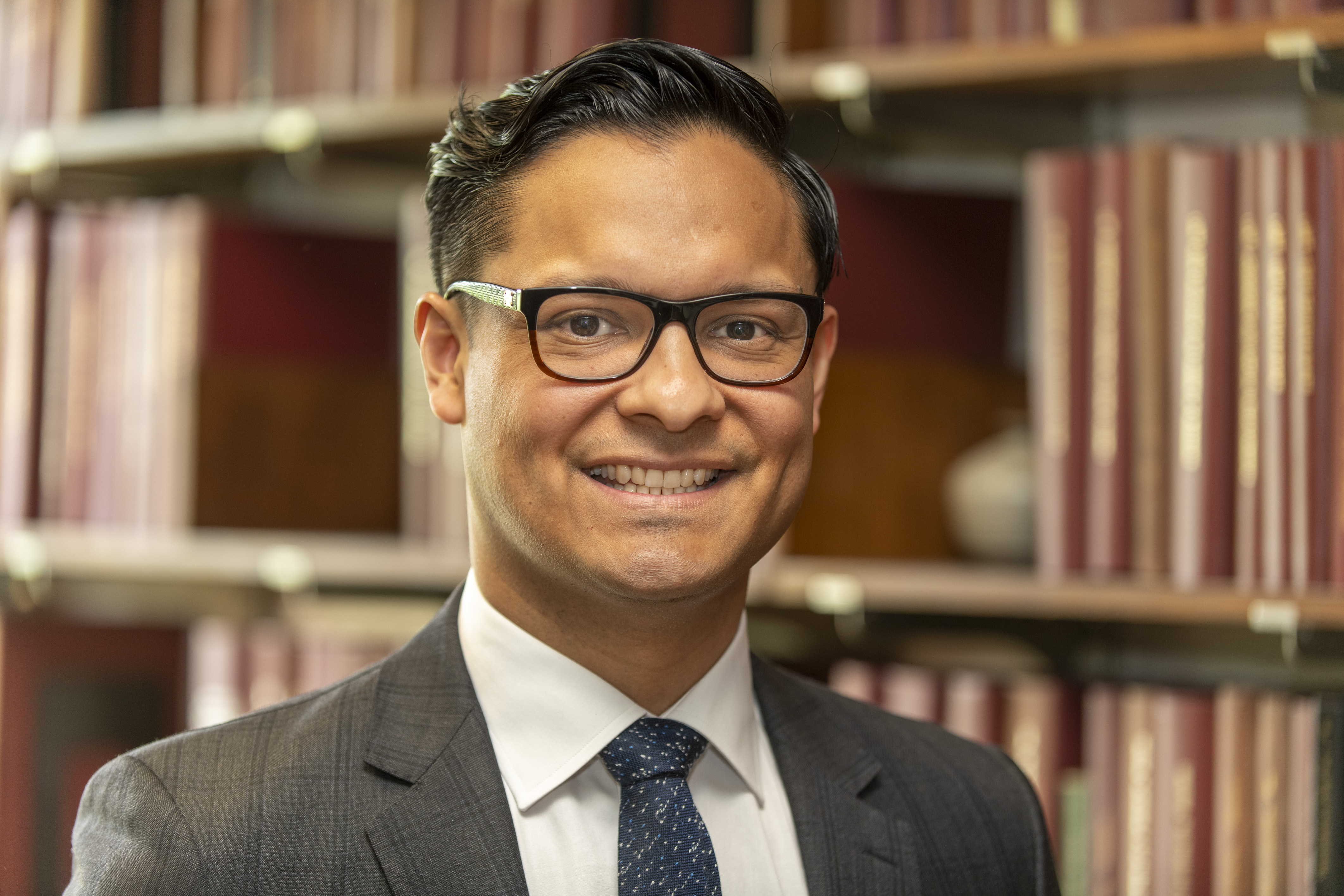
Robert Vargas is professor of sociology and director of the Justice Project at the University of Chicago. He studies how politics is built, concealed, and exercised through public-safety institutions and technology markets, with a focus on the forces shaping policing, urban violence, and city responses to social problems.
Vargas's current research advances two interconnected agendas. The first studies how research designs, funding incentives, and evidence-based paradigms can launder police and tech industry interests through the veneer of neutral science, examining which questions get funded, which metrics are privileged, and how these choice architectures shape policy and public imagination. The second analyzes the effects of privatized public-safety infrastructures: vendor-produced policies, police training packages, and the flow of private donations to police departments.
Vargas is the award-winning author of two books. Wounded City: Violent Turf Wars in a Chicago Barrio brought a political analysis to urban violence, showing how ward redistricting shaped block-level conflict in Chicago's Little Village neighborhood. Uninsured in Chicago: How the Social Safety Net Leaves Latinos Behind (NYU Press) is a longitudinal and intersectional ethnography of uninsured Chicagoans navigating the Affordable Care Act. He has published in Social Problems, Criminology, Social Science and Medicine, and numerous public venues. His work has been featured in NBC News, Telemundo, Univision, the Chicago Tribune, and NPR. Vargas has received the CAREER Award from the National Science Foundation, the New Scholar Award from the American Society of Criminology, and the David Hoeft Award for Newly Tenured Faculty at the University of Chicago.
Through the UChicago Justice Project, he collaborates with journalists, technologists, students, and community organizations to translate research into tools that expand transparency and civic oversight. The Justice Project aims to rebuild the evidence base around safety to hold privatized interventions accountable to the public and better reflect the lives of people most affected by these systems.
Recent Research / Recent Publications
Vargas, Robert. 2022. Uninsured in Chicago: How the Social Safety Net Leaves Latinos Behind. New York: New York University Press.
Vargas, Robert. 2016. Wounded City: Violent Turf Wars in a Chicago Barrio. New York: Oxford University Press.
Robert Vargas[Opens in a new window], David Hackett, Sebastian Ortega, Elena Smyslovskikh and Federico Dominguez-Molina. 2025. "Academic Copaganda." Cambridge University Press.
Schachter, Simon, Eric Chandler, Kiran Misra, and Robert Vargas. 2024. "The Social Structure of Private Donations to Police." Working Paper.
Ternullo, Stephanie L., Angela Zorro-Medina, and Robert Vargas. 2024. "How Political Dynasties Concentrate Advantage Within Cities: Evidence from Crime and City Services in Chicago." Social Forces.
Vargas, Robert. 2022. “Four Ways Race and Capitalism Can Advance Urban Sociology.” City and Community.
Huq, Aziz, Robert Vargas, and Caitlin Loftus. 2022. “Governing Through Gun Crime: How Chicago Funded Police After the 2020 Protests.” Harvard Law Review Forum. Available at SSRN: https://papers.ssrn.com/sol3/papers.cfm?abstract_id=4046125.
Vargas, Robert, Chris Williams, Philip O’Sullivan, and Christina Cano. 2022 “Capitalizing on Crisis: Chicago Responses to Homicide Waves 1920-2020.” University of Chicago Law Review 89: 405-439.
Vargas, Robert, Christina Cano, Paola Del Toro, and Brian Fenaughty. 2021. “The Racial and Economic Foundations of Municipal Redistricting.” Social Problems. https://doi.org/10.1093/socpro/spab076.
Vargas, Robert, and Lee Scrivener. 2021. “Why Latino Youth (Don’t) Call Police.” Race and Justice 11(1): 47-64.